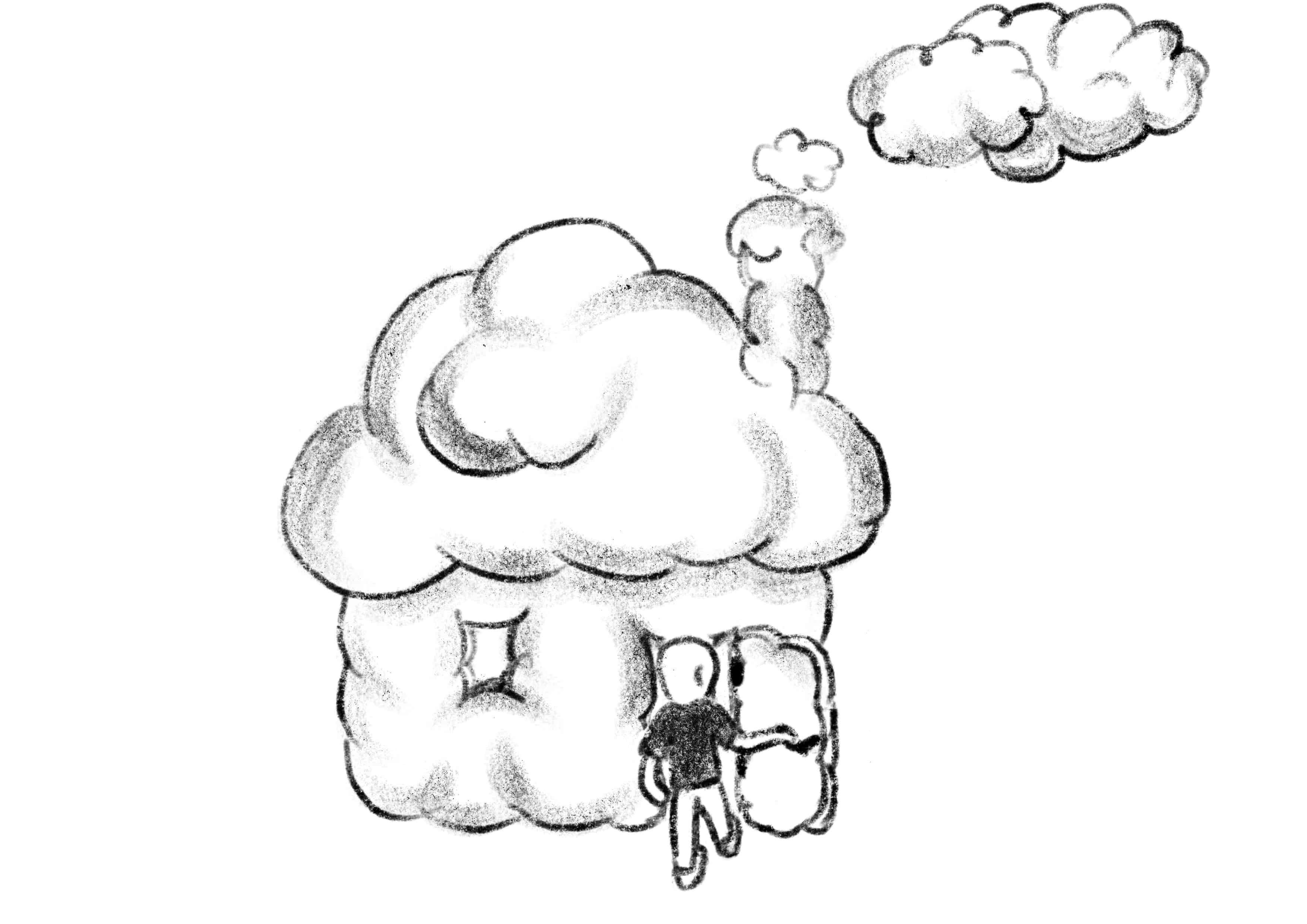
When we go back home, where do we go?
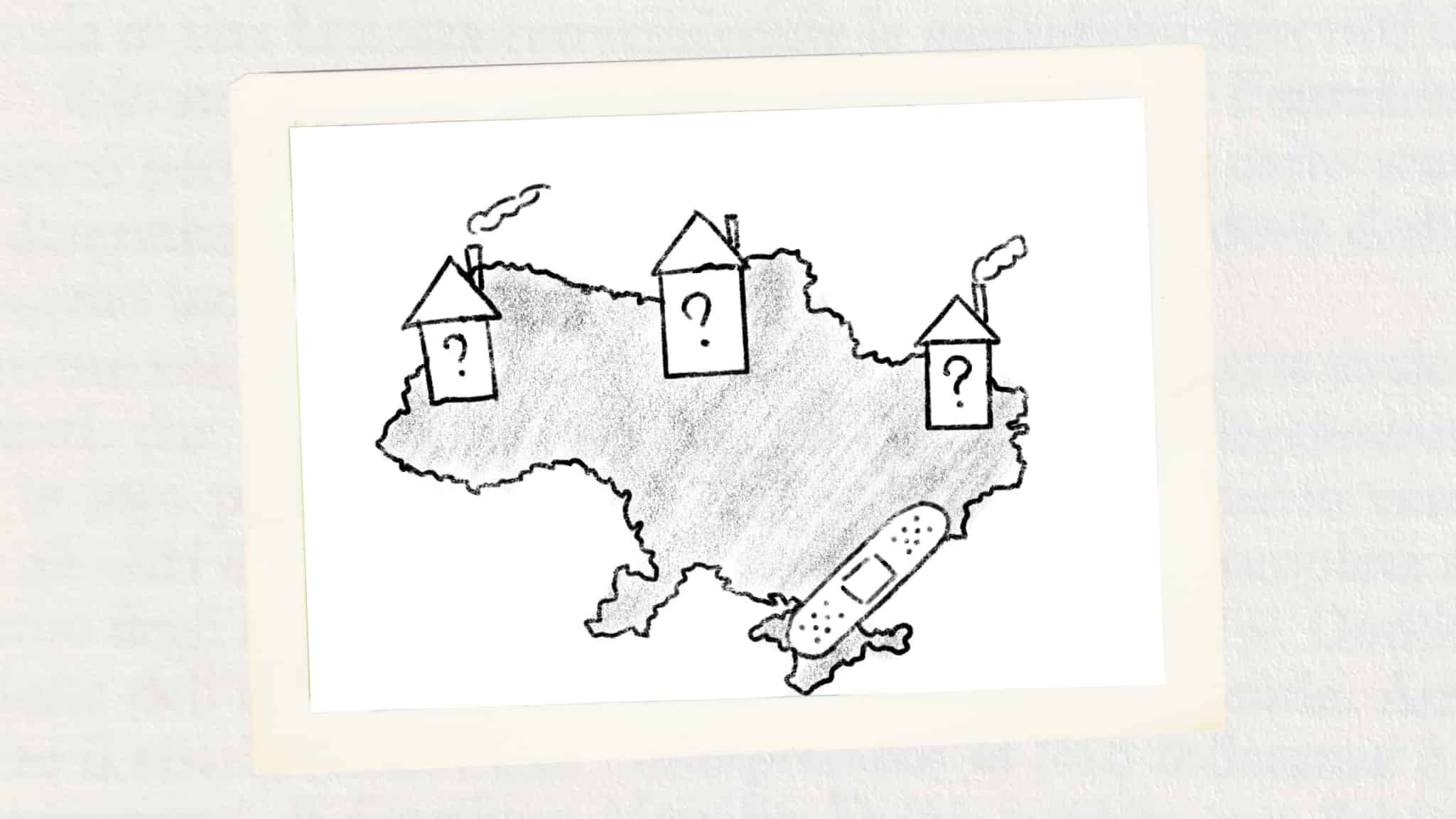
If you have a place
in somebody’s heart,
then reside where you will,
it is home.
Janina Brzostowska
translated by Neil S. Snider
If you ask yourself what home is, the answer is probably ‘where you live’. House. Flat. Room. The place where you walk around in white socks, and lots of other touching little details like that.
It’s interesting how that home changes along with other changes that happen to you.
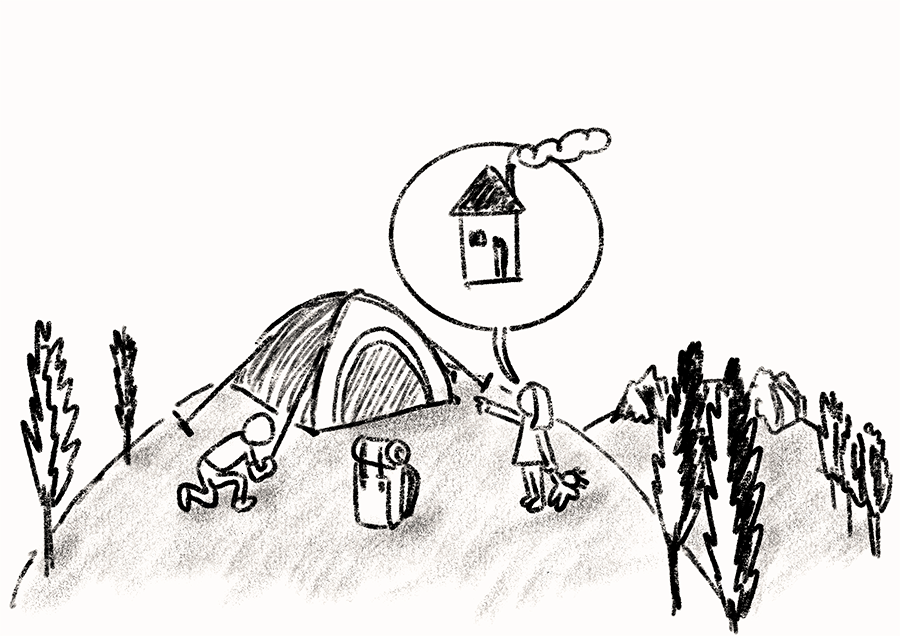
Once I was traveling with my daughter and I put up our tent. Lesya was five or six at the time. She said: ‘This is our home now.’ Something similar happened with the hotels and hostels we stayed in. They became home when we unpacked our things there. It didn’t negate the fact that our home was the flat where I lived, where all our toys, books, and cats were. Where I slept at night. Lesya stayed overnight very rarely. I usually took her home at 10 in the evening.
I rented a flat before the war, and I no longer have access to it. Did my home stay behind in that flat, where I was last happy, or is it in the flat where I grew up? Maybe home is something that’s tied not so much to place as to what you can do there?
Home inevitably slips into conversations. For example, when we were coming back from combat missions to the rented house on the outskirts of Sloviansk, we were coming home. I can’t call that house home now, but then it was our home. It was the place where we charged batteries and slept.
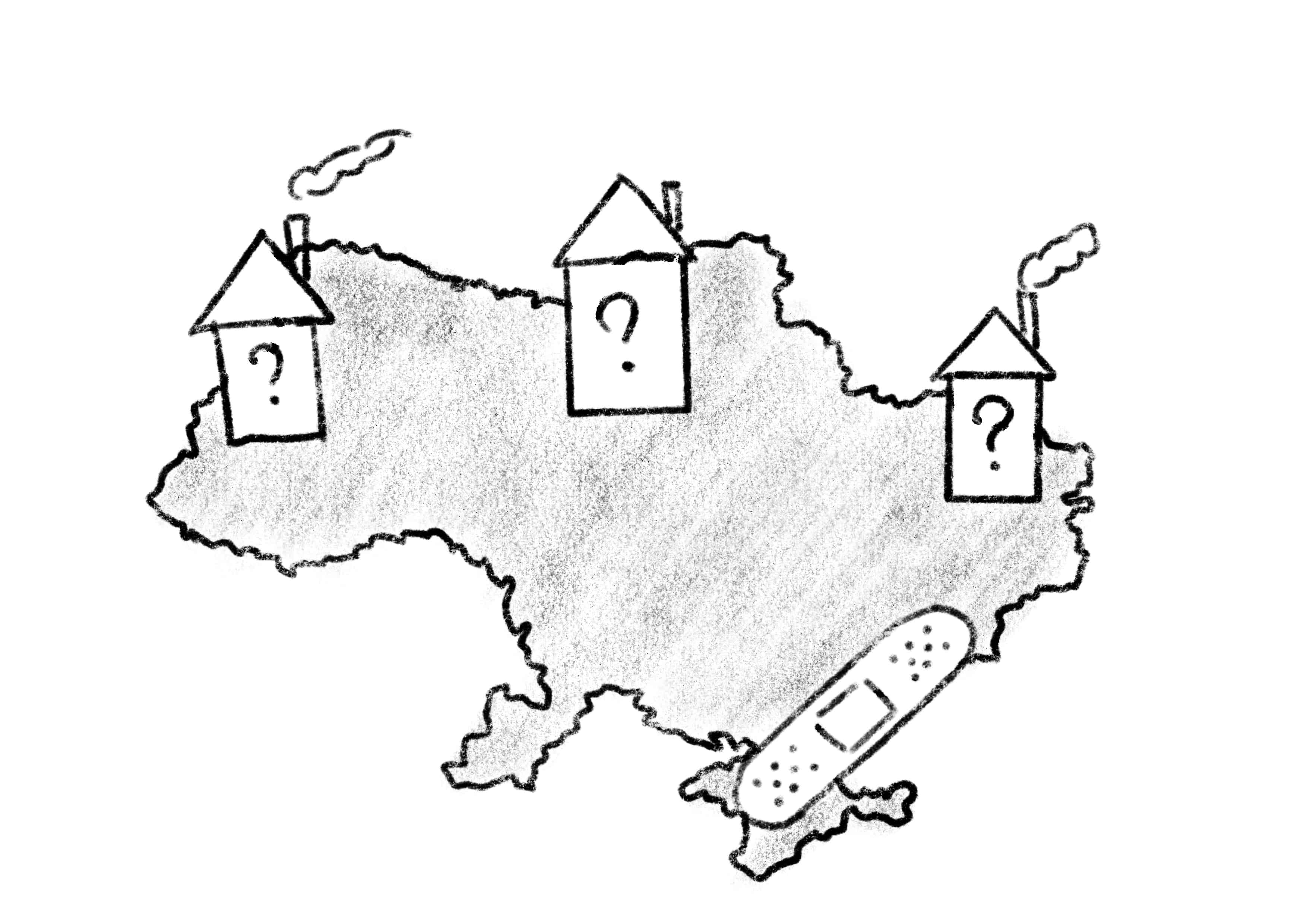
Some confusion happened when we were coming back from training and came through Lviv, and said we were going home—home to Lviv or home to the outskirts of Sloviansk?
I was coming to Lviv on leave before heading off to Donetsk oblast’ for the first time, specifically to those outskirts of Sloviansk. I had some sense of what the war looked like in Zaporizhzhia, but Donetsk oblast’ was somehow more extreme in my imagination. So when I was in Lviv, I wanted to meet with people I loved and give them books I love (comics, obviously) to show them a side of me that they didn’t know. I had the idea that they could swap these books amongst themselves if something were to happen to me. It was both about the books and to give my friends a way to talk to each other without me. What was I trying to create? A home without a roof, where I could show off my books, share comics, like a Jehovah’s Witness? Something similar to how a house functions, but without an owner?
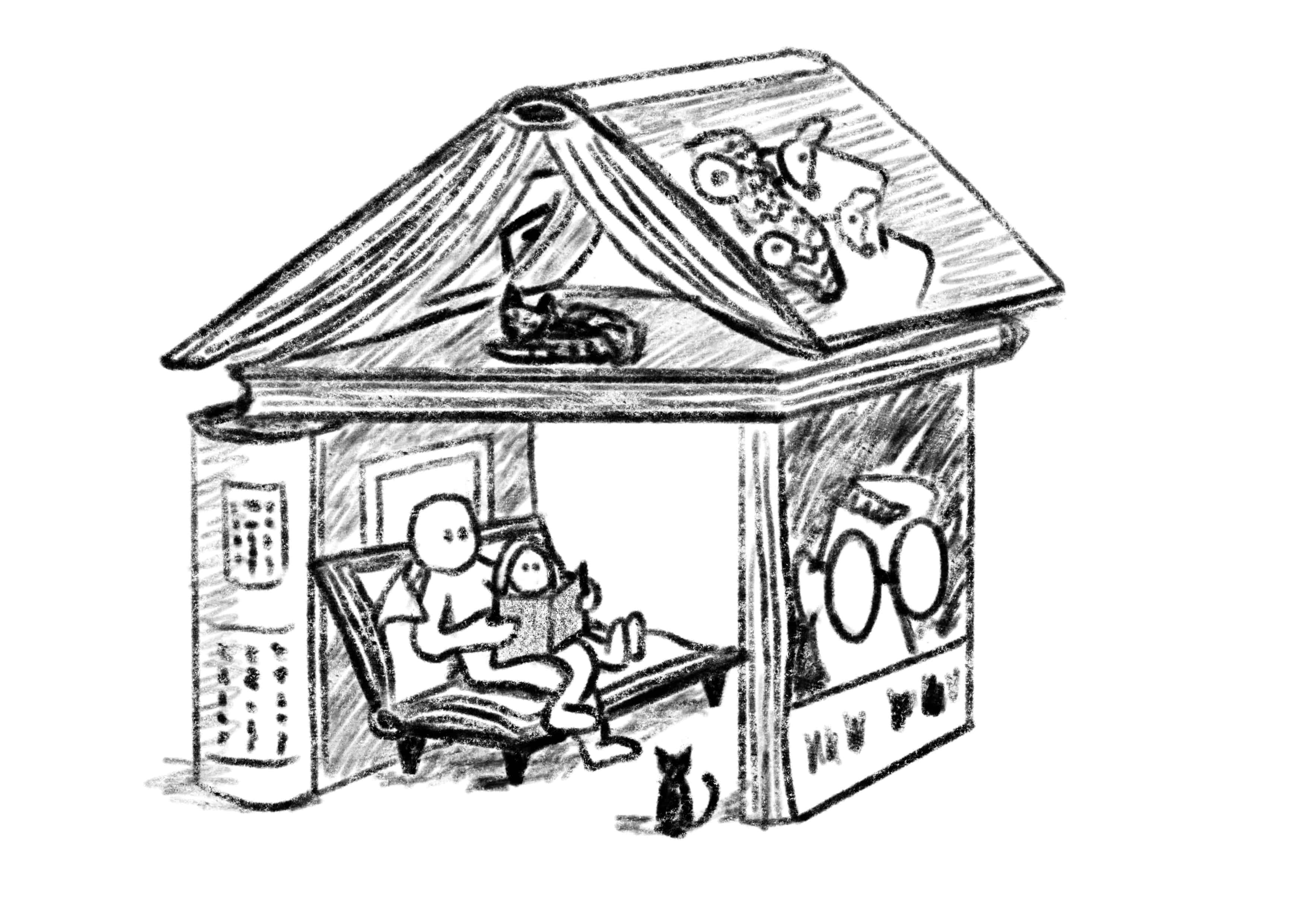
In light of the fact that russia is destroying warehouses of Ukrainian books, the function of home as a personal library makes a lot of sense. A place where there is something that will help me pull myself together, that will help me remember who I used to be.
(The idea of a place where you can recharge batteries doesn’t seem so ridiculous after all—a place where I can restore myself to a functional state. Through books, toys, cats, and whatever else is there?)
I loved playing a game with Lesya: imagine we come home, open the door to our flat and there, sitting at the table, are Dad and Lesya. What would we do? Now I wonder which would be the most burning question—who is the real Dad and real Lesya, or whose house is this? And would this be an absurdist comedy or a fight for survival? And is it possible for the occupiers to become the real Dad and real Lesya if they surround themselves with the world (home?) that Dad and Lesya have created?
A home should be able to tell us something about the people who live there. Even the tent in the mountains could say how many of us there were, the purpose of our trip, and something about what we like and what we need. Perhaps if you look closely, you can read any home like a book about the people who live there. Can you tell the difference between real and fake characters?
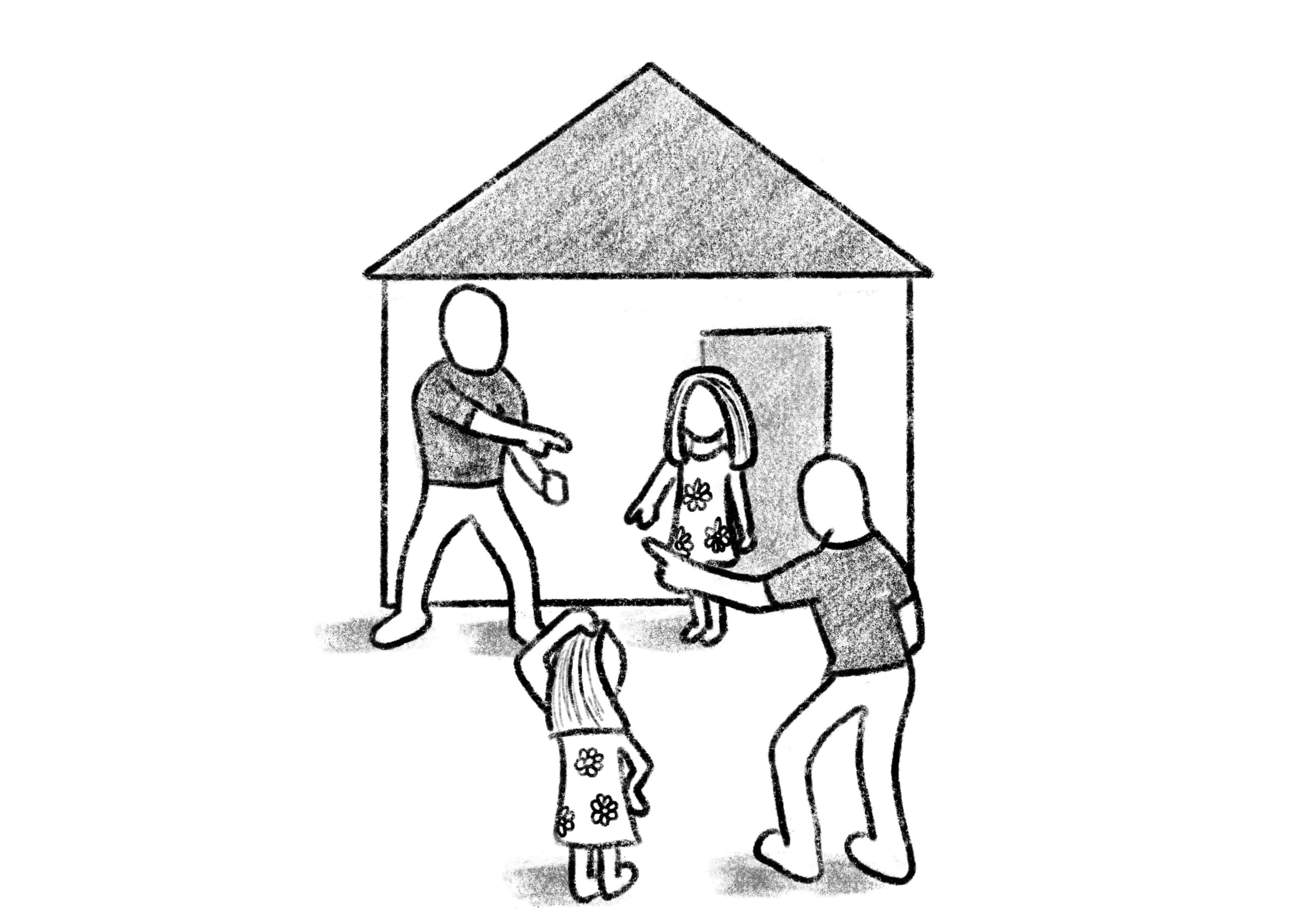
Is it close to the idea that home is a place where I have been and left a mark? Although maybe not, because sometimes you find yourself in places you don’t want to go back to.
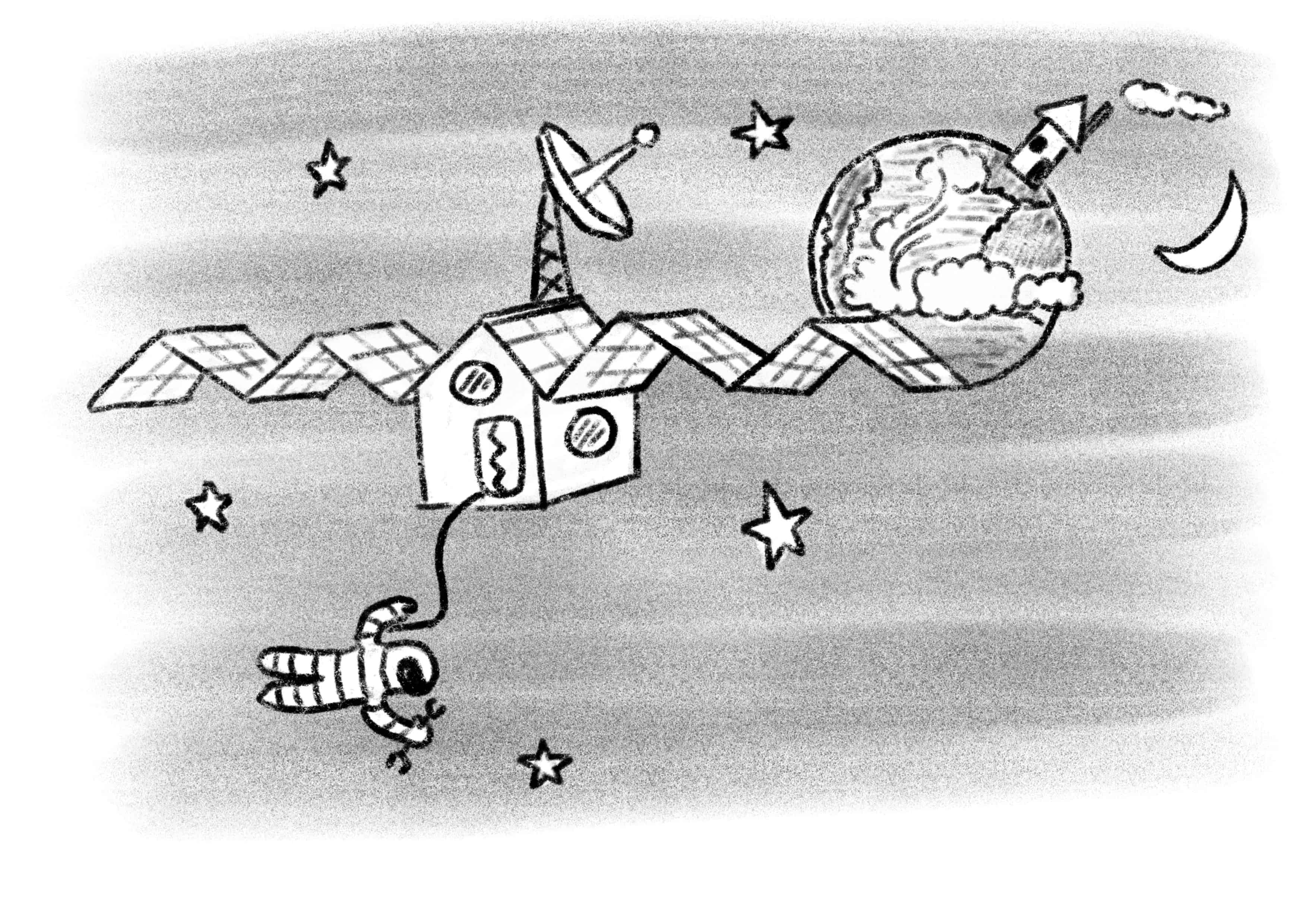
When you come back to Ukraine from abroad and say ‘we’re going home’, it’s not about a street and not even about a city. I wonder if astronauts say ‘we’re going home’ when they are leaving the Earth’s orbit? Or do they say ‘we’re going home’ when they are coming back to their ship from outer space? What is our home? A city, a country, the European Union, the future European Union, the Christian world, Western civilization, or the whole Earth?
There are people who say: ‘Home is where my family is’. But what do people do who are alone and have built a quiet place for themselves, and then that place disappears? Where is their home then?
I know that often when I think about home, I’m thinking about a construct that exists in time, and not in space. It’s nice here, I want to come back. A point on the map where I last felt good, inseparable from the point in time when I last felt good. The last place we played with our toys, books, cats.
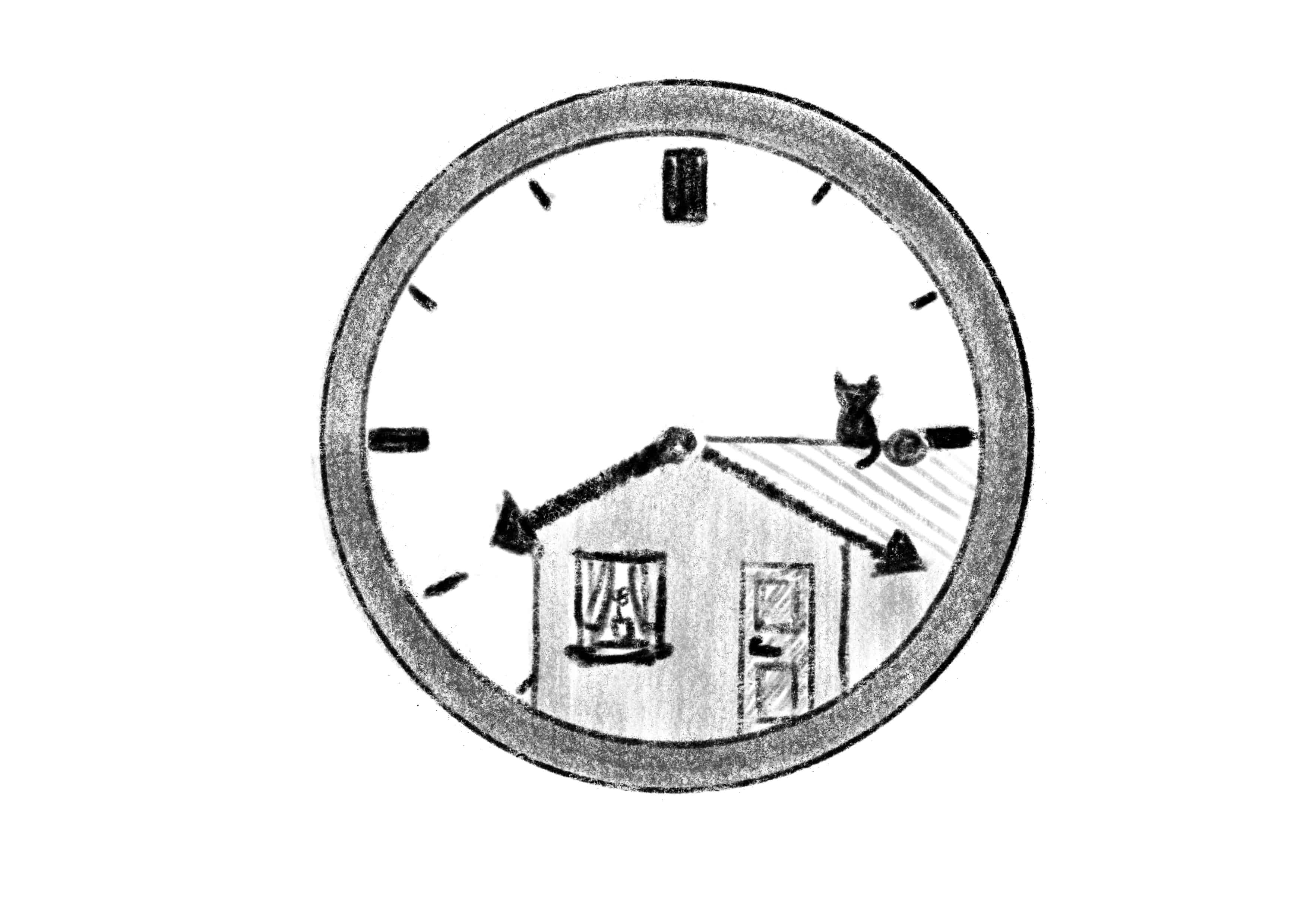
What is this point in time? January 2022? The end of the mask mandate? Visa-free travel to Europe? Maybe that short window in 2014, when Yanukovych had already fled, but Crimea was still ours? But no, the timeline shows that russian special forces started seizing Crimea even before Yanukovych surrendered. It’s hard to pin down the time when we felt OK. And this we—who is that? Lesya was born in 2015, after all.
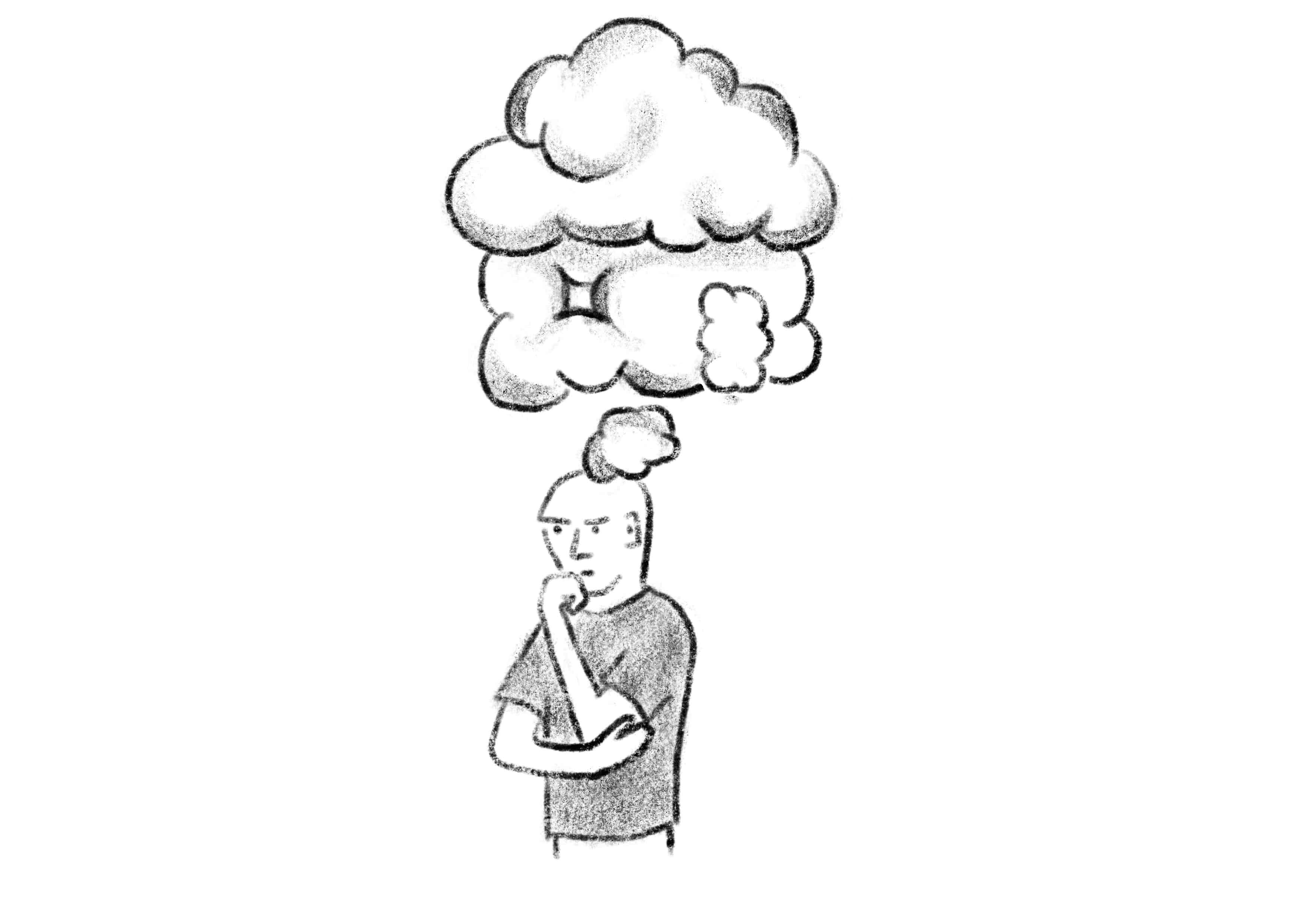
And what if home is a concept of the future? Home not as a place and not as a time that you want to go back to, but as hope?
In this hope, I feel at home.